Water less, but better
More houseplants die from kindness than from neglect. A simple routine keeps roots healthy all year.
Check the soil, not the calendar
Push a finger into the soil up to the second knuckle. If it feels dry at your fingertip, most plants are ready for water. If it is still cool and damp, wait a few days and check again.
Schedules are a good reminder to check, but a plant’s needs change with the season, the light and the warmth of the room.
Soak, then drain
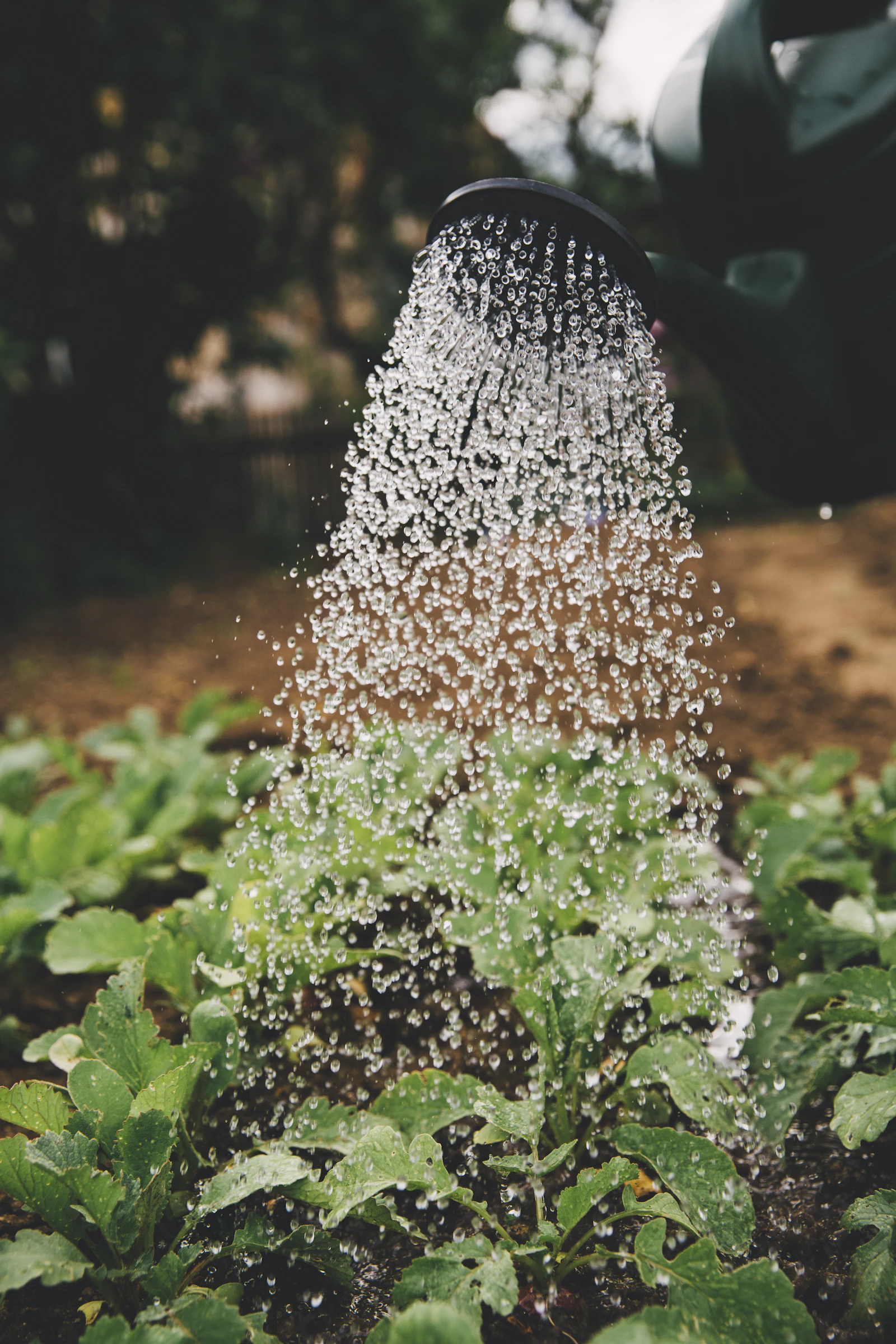
When you water, water properly: pour slowly until water runs out of the drainage hole, then let the pot drain for ten minutes before it goes back into its cover pot.
Little sips keep the top of the soil wet while the roots at the bottom stay dry, and water left standing in a cover pot rots roots from below.
Read the signs
Too little water: drooping or curling leaves, dry and crispy edges, soil pulling away from the pot. Too much water: yellowing lower leaves, soft stems, a sour smell or soil that never dries.
Underwatering is easy to fix with a good soak. Overwatering takes longer: let the soil dry right out, and repot into fresh compost if the roots are brown and mushy.
Winter is different
Shorter days mean slower growth, and slower growth means less water. Most plants need roughly half as much from November to February. Succulents and snake plants may need almost none.
Use water at room temperature, and keep plants away from radiators, which dry the soil and the air at the same time.